The drum carder is one of my favourite pieces of equipment in my Spinnery. I do also have hand carders which could perform all of the same tasks but they can only deal with a small amount of fibre at a time. The drum carder, with its larger capacity, is a great time saver. As much as I enjoy preparing my fibre, my aim is to be spinning as soon as possible and for as long as possible.
Blending Fibres on the Drum Carder.
The first task my drum carder is indespensible for is blending different fibres. We are spoilt for choice now with a vast array of pre prepared fibres from both animals and plants. Lots of outlets sell the most popular blends ready for use but sometimes it is fun to mix and match for yourself. Maybe add some wool nepps for a tweed effect, or even a bit of angelina for sparkle. Drum carders are available with different TPI (teeth per inch) cloth on the drums. 72 TPI is a good general purpose tooth count and will allow you to card the most commonly used fibres. If you think you will regularly be carding very special, fine fibres like cashmere you would probably want a higher TPI count, something like 120 TPI. The higher the count, the finer the teeth and the less likely they are to damage the fibre.
Blending Colours on the Drum Carder.

I couldn’t decide which one I liked best, so there was only one thing to do …
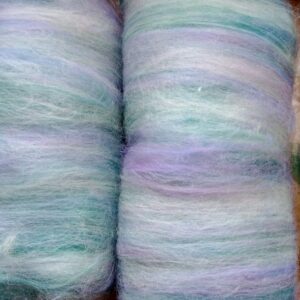
Blend them together on the drum carder!
Oh, this is so much fun! I absolutely love using my drum carder to blend colours. It just feels so exciting, like being a mad inventor, feeding different colours in and seeing how they work together. Most of the time, if I am blending colours I will pick out the colours I want to blend, put them through the carder and make batts. Once all the fibre has been carded, I break up the batts and share them into piles. Then I put them through the carder again to amalgamate the colours a bit more and to make the batts a bit more uniform in colour. I often do this to prepare fibre before felting yardage. It is a good to put some movement in the colour without having distinct patches of different shades.
Take a look at this video clip where I am feeding the fibre into the carder for the second time.
Woolen Preparation.
The decision to spin a woolen yarn informs the way you need to prepare the fibre. A true woolen prep requires the fibres to be pretty much anything other than parallel. To do this with fibre that I have bought as tops, I like to present the fibre to the carder sideways. This results in a batt with truly disorganised fibres. At this point you could just use the doffer to remove the batt from the drum carder, break the batt into strips and spin long draw. Alternatively you can use two pieces of dowel and draw the fibre off the drum and make lots of beautiful little rolags. Then spin long draw from the end of the rolags – this is a heady pleasure indeed!
Carding Washed Fleece.
If you want to process raw fleece then I would definitely recommend a drum carder. Putting your scoured, dry fleece through the drum carder will actually leave you time to spin it before the end of time. Hand carding an entire fleece is not something I would want to contemplate, life is too short. I would caution against putting dirty or greasy fleece through the carder. It will not do the cloth any good and will leave a sticky lanolin deposit on the teeth which will then affect the next fibre you put through the carder.
There are lots of drum carders available, I bought mine from the lovely people at Wingham Wool Work. I chose it because I wanted to be able to easily get support if necessary and because they really know what they are doing with all thing fibre related. Ruth and Alan have been working with fibre for decades and are always really helpful and generous with advice.
Extra wide carders are also available for those who want to create enormous batts. Carders with extra long teeth, called wild carders are also out there. These are usually narrower than standard carders and are designed to allow you to get really creative with what you decide to include in your batts. They allow you to have all kinds of inclusions in your art yarns.
So what are you waiting for? OK, yes, you may need to save up for a while. Drum carders do not come cheap. Take a look at the forums on Ravelry or Fibre Arts groups on Facebook as they do turn up second hand from time to time.

Merino and recycled sari silk after being blended twice on the drum carder.